Alumina cte is an advanced refractory material with superior adhesiveness that can be easily formed into near net shapes using various consolidation and sintering methods, offering precise near net formation. Furthermore, its electrical resistance and thermal shock resistance makes this a highly sought after material.
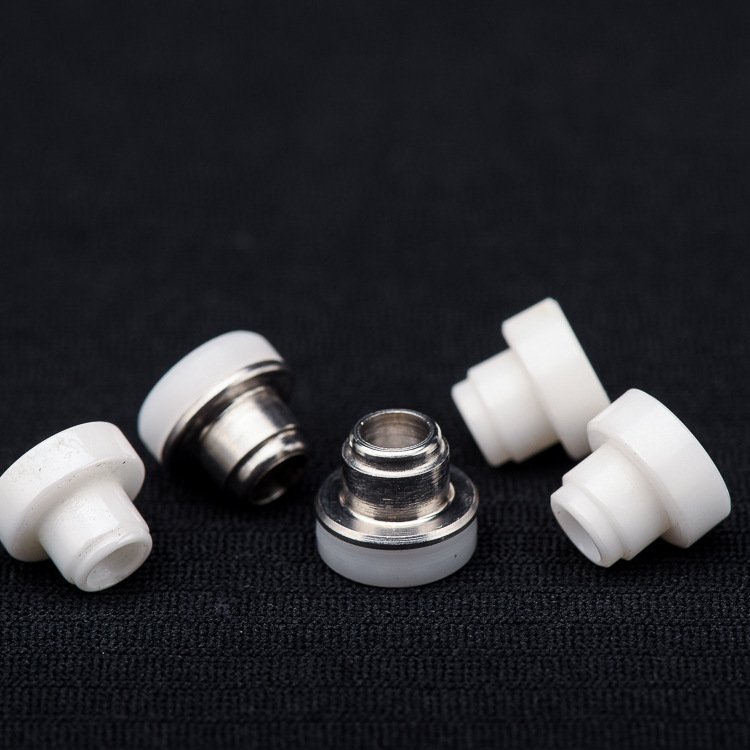
Alumina boasts an extremely low coefficient of thermal expansion (CTE), making it suitable for ceramic-to-metal feedthroughs and insulators, X-ray component feedthroughs, and vacuum pump components.
Thermal Expansion Coefficient
Thermal Expansion Coefficient (CTE) of a material refers to its rate of length gain per unit rise in temperature, or response to changes in temperature, that depends on both specific atom shapes and intermolecular forces that hold them together. CTE measurements can be taken either at one temperature specifically or over several temperature ranges to obtain mean coefficient (a). CTE can also be affected by external influences like pressure, magnetic fields and electric fields that alter alignment of atoms within materials.
Alumina (Al2O3) is an engineered ceramic with the chemical composition Al2O3. Its properties include high mechanical strength, hardness, wear resistance and is one of the two hardest engineering materials (second to silicon carbide). These qualities make alumina ideal for applications including high vacuum equipment, military applications and aerospace components – as well as being suitable for metallising due to its excellent corrosion and heat resistance properties.
Understanding the differences in CTE values of different materials when selecting them for an application is vitally important. Aluminium has a much higher CTE value than copper, which could create complications when connecting dissimilar metals together in applications like electrical cables where expansion forces could cause harmful forces at joints and lead to destructive forces within joints.
To minimise these effects, it is best to choose metals with low CTE values and take note that certain materials expand at a rate proportional to their temperature; meaning if temperatures doubled, this material would expand fourfold!
Linear Thermal Expansion (LTE) is an essential characteristic for materials, as it relates to their elastic modulus, Young’s Modulus and cross-sectional area. Furthermore, LTE also affects strain-free temperature Tref and can be determined using differential Thermal Analysis (DTA).
To determine linear thermal expansion of materials, test specimens are frozen and their dimensional changes measured; these results are then compared with their original values to ascertain its coefficient of thermal expansion value (CTE). CTE results depend on various factors including specimen composition and geometry; measurement techniques for length and temperature; as well as standard or accepted CTE values.
Jaunga modulis
Young’s Modulus measures the resistance of materials to bending or compression. Engineers utilize this property when designing structures to withstand reasonable stress levels, and it is also used as an evaluation method of their elastic properties – making sure they will stand up over repeated use in harsh conditions.
Engineers use several test instruments to calculate Young’s modulus. First, they measure various diameters of material and take readings at multiple points in order to establish an accurate baseline that will be used for further calculations. Next, deformation testing allows engineers to see how different forces affect how the material responds under various circumstances.
Once they’ve evaluated their findings, engineers will calculate a material’s Young’s modulus by comparing its values against standard reference values. This determination will indicate if its stress-absorbing capabilities can withstand normal stresses or whether its fragility precludes use in structural applications.
Young’s modulus of alumina cte depends on several variables, including temperature, alloy composition and crystal structure. It is generally expressed as a function of strain imposed upon it; specifically frac LL0/frac EE(LL)2.
Aluminum and zirconia are materials widely utilized in aerospace, automotive, and industrial products due to their strength, durability, high temperature tolerance and resistance against corrosion and abrasion.
Alumina features strong ionic bonding between its atoms, giving it its desirable material characteristics. Although multiple crystal phases exist at elevated temperatures, most transition to hexagonal alpha phase rather quickly resulting in strong and stiff ceramic material used often in structural applications.
Alumina has an elastic modulus of approximately 69 gigapascals (GPa). This value has been verified through experimental measurements, theoretical calculations and simulations; however, its exact value may differ depending on its processing and manufacturing methods.
Porosity
Alumina ceramics are versatile technical ceramics with excellent corrosion and wear resistance, outstanding mechanical strength, and can withstand challenging environments from earthmoving and material transfer applications to high temperature kilns and furnaces. Alumina ceramics used in these environments typically exhibit tailored microstructures and compositions tailored specifically for their task at hand – these properties make alumina ceramics the preferred solution for many demanding applications.
Pore-forming agents used in the production of alumina ceramics can have an enormous effect on their thermal behavior, such as starch types used for formation. The results of this study indicate that these materials exhibit different porosity levels and pore sizes when produced from potato, wheat and corn starches – with each powder also having differing densities that influence thermal conductivity.
In order to investigate the effect of the pore-forming agent on the thermal properties of alumina cte, three coatings were prepared using different powders and spray parameters in order to explore its influence on thermal insulation properties. Sprayed samples then underwent thermal insulation tests which revealed that coarse and medium particle coatings exhibited lower thermal insulation than fine particle ones; furthermore these ceramics produced from coarse and medium powders had more unmelted particles and an irregular pore size distribution than their fine particle counterparts.
These results demonstrate that pore-forming agents and the particle size of starting powder play a significant role in characterizing porous alumina ceramics, as their size, shape and distribution play an integral role in thermal coating properties such as insulation properties.
Not only did we evaluate pore-forming agents and particle sizes, but we also used X-ray powder diffraction to analyze the 3D AAO structure’s morphology. X-ray results confirmed the existence of longitudinal pores in alumina 3D membranes as well as transversal nanochannels; their length influences thermal conductivity as well as filler material used.
Blīvums
Alumina is an advanced technical ceramic material commonly found in various industrial settings. It boasts superior mechanical and electrical properties, making it suitable for precision sealing applications in high temperature environments as well as offering outstanding insulating qualities due to its extremely low porosity and large grain size. Alumina is chemically inert and resistant to corrosion.
Alumina’s mechanical properties also include its resistance to abrasion, hardness and flexural strength – often exceeding 160 MPa in tension and 280 MPa in flexural strength – determined through testing under specified conditions. Flexural strength measures the material’s ability to deform under load; to assess these properties accurately tensile and flexural strengths are measured by applying stress directly onto it and measuring strain at its point of failure.
Physical properties of alumina may differ depending on its purity and manufacturing process. Reactive alumina has lower melting temperature and higher density than ordinary alumina, and this difference can significantly impact manufacturing, use processes, as well as product performance.
Fine grained technical grade alumina is one of the workhorses of industry and provides an attractive balance between cost and performance. Available purity levels range from 94% for easy metallizability applications up to 99.8%, meeting even demanding applications requirements.
Green or biscuit state ceramic material can be easily machined into complex geometries. Unfortunately, the sintering process required to fully densify it causes it to shrink by approximately 20%; consequently achieving tight tolerances requires precision machining using diamond grinding techniques which can be both time consuming and costly.
Macor Machinable Glass Ceramic can provide a cost-effective alternative when performance of alumina isn’t of paramount concern. Macor has comparable flexural strength and thermal conductivity but with larger grain size; therefore it may offer less abrasion resistance and perform poorly in environments that experience rapid heat up/cool down cycles.
 Latvian
  English
  Arabic
  Bulgarian
  Czech
Czech  Danish
  German
  Greek
Greek  Spanish
  Chinese
  Finnish
  French
  Hungarian
  Indonesian
  Italian
  Japanese
  Korean
  Lithuanian
  Norwegian
  Dutch
Dutch  Polish
  Portuguese (Brazil)
  Portuguese (Portugal)
  Romanian
  Russian
  Slovak
  Slovenian
  Swedish
  Turkish
  Ukrainian
  Estonian