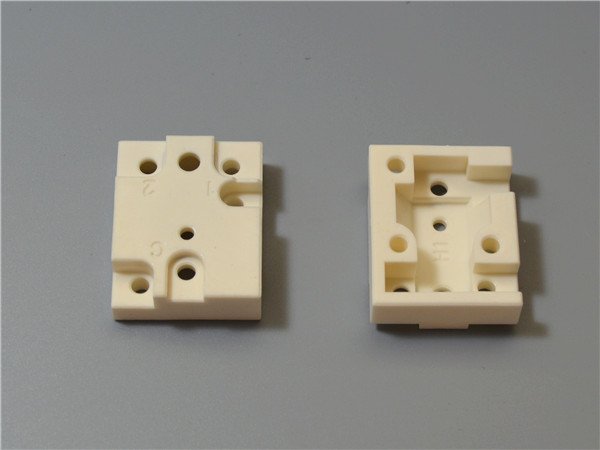
About thermal and electrical insulation, alumina insulator are a performance and dependability masterpiece. Renowned for their exceptional mechanical strength, high thermal conductivity, and excellent electrical insulating properties, alumina insulators find application in many different spheres including various industries. Analyzing their characteristics, applications, manufacturing methods, this extensive book investigates the interesting field of alumina insulators.
Why are alumina insulators used?
Made from aluminum oxide (Al2O3), a material sought for its hardness, thermal stability, and electrical insulation, alumina insulators are ceramic components. Available in many grades and with purity levels ranging from 85% to 99.9%, alumina—also known as corundum in its crystalline form—is Applications requiring outstanding performance, like in high-voltage equipment and advanced electronics demand for high-purity alumina.
Key Alumina Insulator Properties: Alumina insulators are quite robust and mechanically strong. Alumina is second only to diamond in terms of hardness, so it is rather wear and mechanical stress resistant. Its Mohs hardness is about 9.
Alumina’s high thermal conductivity facilitates its efficient heat dissipating ability. Applications where prevention of overheating depends on this characteristic and consistent operation depends on thermal management.
Alumina is a great electrical insulator since it has a great dielectric strength and minimum dielectric loss. Alumina insulators are thus ideal in high-voltage and high-frequency applications where electrical isolation is vital.
Alumina insulators can withstand high temperatures—often up to 1600°C or above—dependent on the purity and particular formulation. This thermal stability assures consistent operation in heated settings.
Alumina resists corrosion by chemical inertness and imperviousness to most acids, alkalis, and solvents. This character ensures that alumina insulators maintain their integrity and performance in severe chemical environments.
Alumina shows little thermal expansion, so under thermal cycle circumstances there is less chance of breaking or deformation. This feature increases the longevity and resistance of alumina insulators.
Applying alumina insulators
Alumina insulators fit for a wide spectrum of applications in many different fields because of their unique properties. Among the most usually used programs are:
Alumina insulator find great use in electrical and electronic components including housings for high-voltage equipment, insulator tubes, electronic circuit substrates, Their excellent electrical insulating properties ensure consistent performance in many different vital applications.
Applied in applications requiring efficient heat dissipation, alumina insulators are heat sink, thermal barrier, and insulative component. Perfect for managing heat in industrial systems and electrical equipment, their excellent stability and thermal conductivity make
In high-temperature furnaces and kilns, alumina insulators have application as thermocouple protection tubes, support structures, and insulative linings. Their ability to resist very high temperatures guarantees the durability and efficiency of these furnaces.
Thanks to their biocompatibility and chemical inertness, alumina insulators find employment in surgical tools, diagnostic instruments, and implantable sensors among other devices. The dependability and performance of these delicate applications mostly define them.
Aerospace and Defense: Applications requiring significant mechanical strength and thermal stability in the aerospace and defense industries find demand for alumina insulators. These cover missile systems, satellite gear, and aircraft engine components.
Bearing, seal, and wear-resistant parts of industrial machinery find use for alumina insulators. Their cheap maintenance costs and consistent performance come from their resistance to wear and strength.
Advantages of Aluminium Insulators
One of the several advantages of alumina insulators distinguishes them from other materials.
Alumina insulators provide in demanding applications consistent and reliable performance. Their longer-term operation free from breakdown is guaranteed by their greater mechanical strength, thermal stability, and electrical insulation.
Effective heat dissipation and avoiding overheating let alumina insulators maximize thermal management applications. Longer lifetime and improved performance of industrial machinery and technological devices follow from this.
Although alumina insulators cost more than other materials at first, over time their low maintenance needs and long service life make them a more affordable choice.
The vast range of applications for alumina insulators emphasizes their adaptability and flexibility in many spheres. From high-voltage gear to medical equipment, alumina insulators have great value in several applications.
Great electrical and thermal insulating characteristics of alumina insulators provide a safe environment for high-voltage and high-temperature applications. This reduces the chance of accidents and guarantees better working conditions.
Insulators from Alumina: The Production Method
Alumina insulators are made in several crucial phases to ensure their remarkable accuracy and quality:
The process begins with preparation of the high-purity alumina powder. Usually produced in the Bayer process, which polishes bauxite ore to produce aluminum oxide, this powder is
Pressing, extrusion, or injection molding assists the alumina powder to be formed as necessary. This stage can call for the use of binders to maintain the shape of the insulators throughout following treatment.
The manufactured insulators in a sintering furnace are heated to rather high degrees. Through compaction of the powder into a dense, solid state, this method eliminates any porosity and enhances the mechanical properties of the insulators.
Following sintering machining and polishing the insulators helps to get the correct surface finish and dimensions. This stage is vitally essential to ensure the accuracy and smoothness required for their several purposes.
Comprehensive quality control checks are the last stage to ensure the alumina insulators meet the required requirements and standards. This addresses looks for any defects or anomalies as well as tests of thermal and electrical properties.
All things considered, alumina insulator shows a significant advancement in materials science and engineering. Their exceptional properties—high mechanical strength, thermal conductivity, and electrical insulation—make them indispensable in many diverse sorts of industrial applications. From medical equipment and high-temperature furnaces to electrical and electronic components, alumina insulators offer value by means of great performance, durability, and efficiency. Overcoming challenges and advancing technology as industries evolve and need improved standards of quality and dependability call for will undoubtedly depend on alumina insulators. From advanced electronics to sophisticated aeronautical systems to essential medical equipment, alumina insulators are proof of the power of creative materials to transform modern sector.
 Norwegian
  English
  Arabic
  Bulgarian
  Czech
Czech  Danish
  German
  Greek
Greek  Spanish
  Chinese
  Finnish
  French
  Hungarian
  Indonesian
  Italian
  Japanese
  Korean
  Lithuanian
  Dutch
Dutch  Polish
  Portuguese (Brazil)
  Portuguese (Portugal)
  Romanian
  Russian
  Slovak
  Slovenian
  Swedish
  Turkish
  Ukrainian
  Estonian
  Latvian