Alumina Rods – Uses As Insulators and Supports
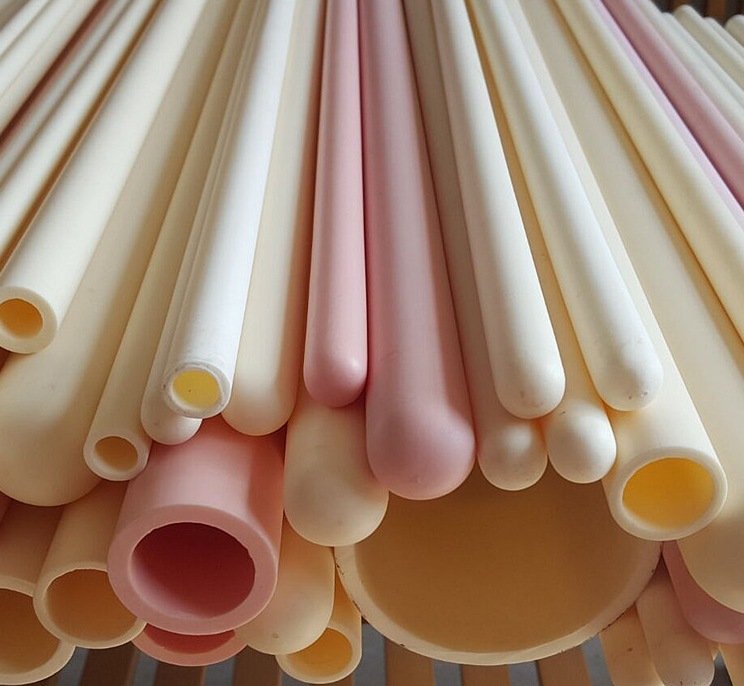
Alumina rods are solid cylindrical structures constructed from aluminized glass that offer exceptional electrical insulation, chemical resistance, and thermal stability. Alumina rods are frequently utilized as insulation in chemical processing equipment and electronic devices to shield delicate components from harmful chemicals or high temperatures. These vessels and crucibles can also be used as reaction vessels in laboratory analytical techniques like spectroscopy or chromatography.
High-Temperature Stability
Alumina rods are typically manufactured via powder compaction and then sintering at high temperatures, and offer excellent stability in extreme temperature environments. Their thermal conductivity and resistance to thermal shock make them the perfect supports and insulators for high-temperature applications requiring structural support or elements.
Insulating bushings for refractory components, thermocouple protection tubes, and other thermal measurements in harsh environments. Their mechanical strength and wear resistance allow them to be utilized as material handling components such as valves, pumps, or any machinery part that endures friction, abrasion and high pressure conditions.
Alumina (Al2O3) rods are chemically inert and resistant to most corrosive chemicals, making them suitable for laboratory use as reaction vessels or crucibles without risking unwanted reactions or contamination during experiments with sensitive substances.
High-temperature rods are widely used as experimental fixtures to enable precise measurements and data acquisition in laboratories with demanding environments, especially research settings with demanding high-temperature environments. Due to their excellent thermal stability, mechanical strength, chemical inertness and ability to withstand fire at high temperatures they also make them an excellent option for use in EV battery industry equipment that fires volatile lithium compounds at elevated temperatures. Common methods of installation are welding the ends together or using clamps with tight seals that guarantee bakeout-proof operation as ways of holding in place the rod ends securely in place – either way works just as effectively.
Excellent Chemical Resistance
Alumina ceramics are inert materials that do not react with many types of chemicals, making them suitable for chemical processing, high temperature applications and laboratory environments. Furthermore, this material can withstand corrosion-laden environments while maintaining mechanical strength and stability at extreme temperatures.
Alumina rods are widely utilized in electrical and electronic devices as insulators, resistors, capacitors, etc. Their insulating properties allow them to operate safely in high-voltage environments while protecting delicate electronic components from damage or leakage.
Due to their hardness and durability, alumina rods are widely utilized as mechanical seals and bearings in industrial machinery. Furthermore, due to its biocompatibility properties they’re also an increasingly popular material choice for medical devices including surgical instruments and implants.
Alumina rods are highly optically transparent in both UV and visible light spectrums, enabling scientists to conduct optical experiments without interference from the material itself. As such, they make excellent light guides or cuvettes in optical spectroscopy or photoluminescence analysis applications.
Alumina ceramic rods are manufactured using high-purity alumina through various processes such as injection molding and isostatic pressing, with many sizes and shapes available that can be precision machined to extremely tight tolerances. Common uses for them include high temperature applications like kilns and crucibles; thermocouple protection tubes provide reliable insulation against thermal stresses in these demanding environments.
Optical Transparency
Alumina is one of the clearest materials available for laboratory and scientific experiments, making alumina rods highly transparent for light guidance or cuvette use without interference from its composition and enabling accurate measurements or optical analyses to take place without interference from other materials present in its structure. This makes alumina especially valuable across many scientific disciplines and industrial applications including metallurgy, ceramics, chemicals machinery optical spectroscopy catalysis medical treatment among many others.
Alumina tubes have become an essential component of modern electronics and semiconductor production due to their excellent thermal stability and resistance to corrosion; making them perfect for protecting thermocouples from damage or contamination in high-temperature environments.
Due to alumina’s transparency in both ultraviolet and visible wavelengths, laboratories and scientific research institutions frequently utilize it as a light source or optical shield. This enables researchers to conduct various tests and observations using light-based methods such as optical spectroscopy or photoluminescence.
Alumina can be made translucent or opaque by treating and coating it in various ways to meet different uses. SPS densification produces sapphire-like products for less cost, as well as hard metal cutting tools, grinding wheels, parts used for CVD ion implant photolithography semiconductor components as well as semiconductor manufacturing processes.
Wide Range of Applications
Alumina rods are used across industries due to their superior thermal stability, mechanical strength and electrical insulation properties. Alumina can withstand harsh high-temperature environments as well as significant mechanical stresses and pressures, making it a crucial component in applications like chemical processing and metallurgy.
Metal seals are integral parts of manufacturing due to their exceptional corrosion resistance against acidic and alkaline solutions, as well as being exposed to numerous chemicals – which allows them to protect equipment against material degradation in high pressure/temperature industrial settings.
Materials research requires experimental setups with thermal or electrical measurements, and alumina rods play an invaluable role. Their high temperature stability enables them to withstand harsh environments without deforming or warping, guaranteeing accurate measurements.
Furthermore, their high temperature resistance and thermal conductivity make them perfect for creating kiln furniture or acting as heat exchangers in ceramic or metallurgical applications. Their ability to distribute heat effectively while minimizing thermal stress allows for consistent temperature distribution, thus saving energy while providing efficient heating processes.
Alumina rods are highly valued components in the electronics industry for their superior electrical insulation properties, offering reliable protection from electrical leakage in high temperature environments and providing reliable insulation against leakage in demanding high temperature applications. Their hardness and durability also make them indispensable components in various machining applications used in producing resistors and capacitors among many other electronic devices.
 Dutch
Dutch  English
  Arabic
  Bulgarian
  Czech
Czech  Danish
  German
  Greek
Greek  Spanish
  Chinese
  Finnish
  French
  Hungarian
  Indonesian
  Italian
  Japanese
  Korean
  Lithuanian
  Norwegian
  Polish
  Portuguese (Brazil)
  Portuguese (Portugal)
  Romanian
  Russian
  Slovak
  Slovenian
  Swedish
  Turkish
  Ukrainian
  Estonian
  Latvian