Alumina ceramics offer superior resistance to mechanical wear and tear, providing long lifespan and minimal maintenance needs, which contributes to their cost-effectiveness.
Imagine pipes as being like veins designed for blood flow and tubes as providing structural support. They’re commonly found in manufacturing facilities to construct lightweight frames suitable for multiple uses.
Types
Aluminum tubing and pipes are popular choice among many users due to its lightweight properties and resistance to corrosion. Aluminum is highly malleable and adapts easily to different applications, making it suitable for residential, commercial, and industrial settings alike. There are various grades of aluminum available; with higher purity grades typically costing more. But in certain applications their increased performance and lifespan make the extra investment worth your while.
Application-specific pipe sizes, strengths and diameters will depend on their purpose; smaller pipes typically handle gases and liquids while larger ones are often used to carry water and steam. Coated with abrasive materials to prevent wear-and-tear and improve performance. High-purity alumina tubes possess combination mechanical, electrical and thermal properties which make them well suited for many different uses – they’re often employed in manufacturing ceramic to metal feed throughs, X-ray components and high voltage bushings; additionally medical applications include blood valves, electrode holder assemblies as well as ceramic to metal brazing applications.
Piping is another versatile choice in construction, offering an attractive and durable solution for scaffolding, frames and railings. Aluminum’s corrosion-resistance helps preserve its integrity as part of any structure; additionally, its lightweight nature makes it easier to handle and move around.
Piping comes in various shapes. Square, rectangular, and circular options exist which can be used for various applications. 6061-T6 aluminum alloy round piping is most frequently utilized; however there are other variations available to meet specific requirements – 5086 aluminum alloy box piping used in structural applications; aluminum alloy 7075 pipe used frequently on aircraft fuselages and fuel lines due to its ability to withstand great amounts of pressure without collapsing; plus its increased corrosion resistance makes this an excellent option.
Tillämpningar
Alumina pipes have an array of applications. Home water and sewage systems as well as plumbing and heating often utilize them, while they’re also found in industrial settings where corrosion-resistant material is necessary. Scaffolding, framework and railing applications often use them due to their strength, durability and resistance against harsh environments making it a preferred option.
Alumina products are widely utilized in medical device production, particularly stents, where their inert nature and resistance to corrosion prove invaluable. Alumina can also serve as an electrical insulator – particularly higher purity grades which offer enhanced resistance against oxidation – as well as being employed as support columns in chromatography columns; its high temperature resistance and abrasion resistance being among its key advantages.
Aluminum is widely used in manufacturing machinery such as furnaces and kilns to regulate temperatures in their environment and prevent oxidation, while it serves to provide cooling airflow throughout an engine’s cooling system. Furthermore, due to its malleability it can also fit many different equipment types or vehicles perfectly.
Aluminium tubes have become a trendy material choice in interior design for creating lightweight furniture pieces, including chairs and tables, that offer modernity while remaining functional and comfortable. Their strength and malleability allow designers to shape them into arches or curves with ease.
Aluminum’s recycling properties also make it a more eco-friendly material than other options such as steel which deteriorate over time. Recycling aluminum uses approximately five percent of the energy necessary for manufacturing new aluminum from raw bauxite ore, making it an ideal choice for those aiming to reduce carbon emissions while maintaining product and machine performance.
Renhet
Alumina ceramics come in different purity levels, making them suitable for applications where contamination is not desired, such as semiconductor manufacturing and laboratory settings. High-purity alumina may also be used as protection tubes with multiple holes or channels designed to shield sensitive components from high temperatures.
Alumina tubes are chemically inert and resistant to acid, alkalis and other corrosive materials. Being insulators makes them useful in electrical insulation applications and semiconductor manufacturing, with operating temperatures reaching 1800 degrees Celsius both oxidizing and reducing environments. Furthermore, their hard surface can withstand physical damage including impacts so making these protective tubes an ideal choice.
Aluminum pipes are less costly and easier to work with than their steel counterparts, allowing for faster installations costs and simpler configuration. Plus, their corrosion-resistance makes them an excellent choice for marine applications as well as homes and buildings.
Aluminum has long been used in the automotive industry to construct car parts and fuel lines. Furthermore, its applications range from construction projects such as pipework and ductwork installations to recreational uses like camping chairs, extendable ladders, tent poles and tables.
Alumina is widely utilized as an abrasive grain in both machining and grinding tools due to its outstanding wear resistance, making it suitable for use on various materials such as wood and metal. Furthermore, it makes an excellent surface abrasive capable of polishing surfaces as well as stripping paint from surfaces.
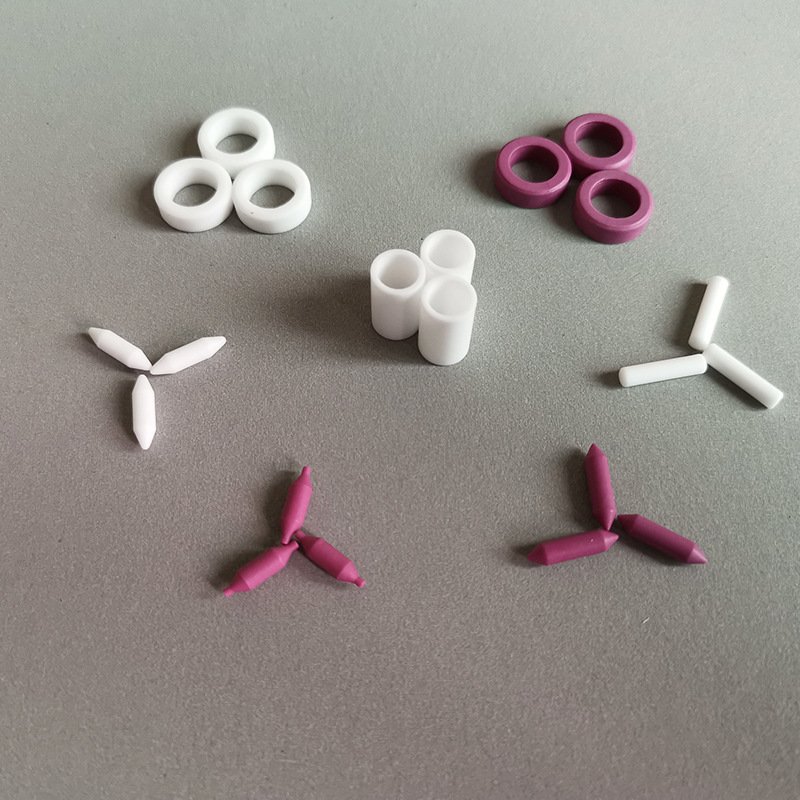
Alumina tubes are constructed from high-purity alumina powder sintered at extremely high temperatures in a kiln to guarantee maximum quality and durability. Available in various diameters and wall thicknesses to meet various applications, these hygienic tubes can easily be cleaned making them suitable for food processing, pharmaceuticals, electronics power generation aerospace hydrogen storage systems oil & gas or many other sectors.
Strength
Alumina ceramic tube excels when applied to high temperature applications, particularly where mechanical stress and chemical corrosion resistance are concerned. Furthermore, its thermal stability makes it ideal for roller kiln applications where materials must be regularly moved up and down in temperatures that fluctuate significantly.
Higher purity grades of alumina tubing can be used as electrical insulators, offering excellent dielectric strength and strong acid and alkali resistance at high temperatures. They are frequently employed as protection tubes for thermocouples in alumina ceramic kilns as well as heating elements used for temperature measurement applications.
Based on size and application requirements, Alumina ceramic tubes are often utilized as:
Mullite or “aluminosilicate” ceramic is an exceptionally hard technical ceramic with excellent high-temperature strength and stability, as well as outstanding corrosion resistance at elevated temperatures – making it the ideal material to use in alumina ceramic kilns, as it can withstand extreme temperature fluctuations as well as high levels of oxidation without suffering degradation.
Vibration- and abrasion-tolerant materials like ceramic are well suited to serving as electrical wire insulators, making them popular choices in gas turbines and high-pressure boilers. Ceramic is also commonly used as an economical replacement to tungsten carbide for gas turbines and high-pressure boilers.
Alumina’s low water absorption and high brittleness make it an excellent candidate for ceramic to metal or brazed assemblies in high vacuum systems, laser equipment (gas-filled solid state and waveguide lasers) as well as medical and scientific instruments.
Aluminium boasts an exceptional strength-to-weight ratio; however, we do not advise using it for tailpipes in drag racing applications due to heat treating (T6) required to bend it, which greatly decreases its yield strength. A typical T6-treated aluminum tailpipe typically only lasts up to 475F before fatigued metal fatigues or cracks under stress before fatigue issues arise whereas 304 stainless steel can operate up to 1,700F without any fatigue issues – an important difference when applied in high stress applications like drag racing where exhaust exhaust systems endure high stress levels as well as temperature variations.
 Swedish
  English
  Arabic
  Bulgarian
  Czech
Czech  Danish
  German
  Greek
Greek  Spanish
  Chinese
  Finnish
  French
  Hungarian
  Indonesian
  Italian
  Japanese
  Korean
  Lithuanian
  Norwegian
  Dutch
Dutch  Polish
  Portuguese (Brazil)
  Portuguese (Portugal)
  Romanian
  Russian
  Slovak
  Slovenian
  Turkish
  Ukrainian
  Estonian
  Latvian