Alumina Pipe – Durable Solution For High Temperature Applications
Alumina is an abundant natural mineral found within Earth’s crust that boasts numerous characteristics that make it suitable for high temperature applications, including its ability to withstand high temperatures, chemicals that attack its surface and electricity.
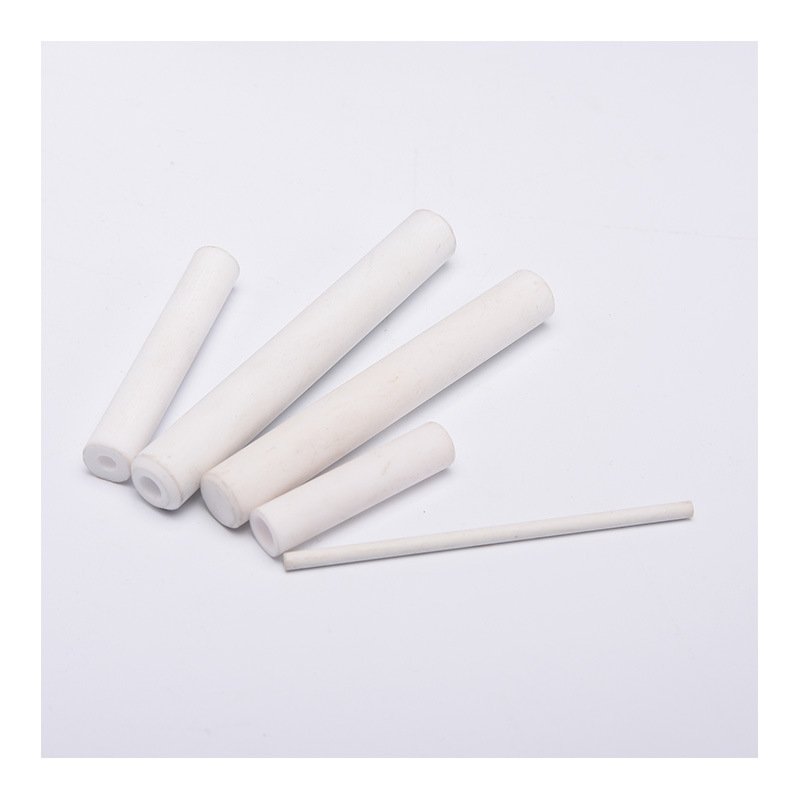
Alumina pipe are often utilized as protective coverings for high-temperature thermal couples. Furthermore, these materials offer excellent wear resistance and corrosion resistance properties.
Atsparumas aukštai temperatūrai
Alumina ceramic tubes can withstand temperatures up to 1800degC while remaining stable, making them an excellent choice for use in various environments. Not only are these materials chemical resistant and hard wearing; their low coefficient of thermal expansion (approximately 10.3x 10⁻⁶/K) makes them suitable for many situations.
Alumina tubes feature superior insulation properties that make them safe to use with electrical equipment and remove the risk of short circuits, providing superior dielectric strength against electrical surges, as well as providing extra protection from damage due to electrical surges.
Industries working with chemicals that corrode Alumina tubes benefit from its excellent chemical resistance, using it as furnace linings, thermocouple protection tubes or to hold crystal growth crucibles for crystal growth. Laboratory settings often employ Alumina as supports for crucibles or sample holders during materials characterization techniques. Alumina has become more cost-effective than austenitic stainless steel (SS), while it offers superior creep resistance which makes it suitable for high temperature processing environments.
Excellent Corrosion Resistance
Aluminium pipes, in comparison with their steel counterpart, are much less susceptible to corrosion, making them an excellent choice for seawater cooling systems such as desalination plants. Alumina-coated pipes can resist damage from both inorganic acids as well as salt solutions and organic solvents without succumbing to corrosion.
Alumina has high resistance to wear and abrasion, providing long-term protection to metal pipes from damage from materials like coal or ash that require high levels of abrasiveness such as coal dust. Alumina lined steel pipes may last decades with proper installation and care.
Alumina ceramic heat pipes offer excellent insulation, abrasion and compression resistance, corrosion resistance and high temperature resistance – qualities which make them popularly used in manufacturing ceramic cylinder liners for mud pumps and igniter insulators for gas stoves. Furthermore, since these pipes are produced as one piece rather than being joined at both ends separately, their strength and reliability increases greatly.
High Durability
Alumina ceramic pipes boast long lifespans and superior strength to PVC pipes, offering better insulation, abrasion and compression resistance, corrosion-resistance as well as thermal conductivity three times greater than steel – ideal features for hydraulic and pneumatic systems.
Alumina (or aluminium oxide) is an extremely hard-wearing material with excellent chemical and physical resistance to acids and alkalis, high temperatures, excellent electrical insulation properties, chemical inertness, low expansion rates and is popularly used as insulation material in furnaces/kilns as well as electrical insulators.
Power plants employing coal or blowtorch pipelines typically line these pipes with alumina ceramic to protect it from any abrasive materials that might erode away at it over time. Alumina ceramic has also become common practice at desalination plants and other industrial facilities that transport coal, ash or slurry for transport – providing protection from their abrasiveness while prolonging pipe replacement requirements.
Lengvas
Alumina ceramic heat pipes feature a high melting point, enabling them to maintain structural integrity even under extreme conditions. This enables optimal energy transfer, minimization of energy loss and maintaining an ideal thermal environment for efficient operations. Furthermore, its electrical insulation properties protect components in your system against dangerous leakage or short circuiting issues.
These alumina pipe are also highly durable, capable of withstanding both sliding and impact abrasion. Primarily used as protection tubes for thermocouples in high-temperature measurement applications.
As well as their excellent abrasion resistance, ceramic tubes from Alumina Ceramic offer low coefficient of thermal expansion (10.3×10⁻⁶/K), making them suitable for applications where temperatures change frequently. Furthermore, these non-toxic tubes offer resistance against chemical corrosion as well as being non-toxic – ideal qualities when it comes to medical or food-grade applications. Alumina ceramic is also known to resist corrosion caused by chemicals and food-grade applications; hence making alumina ceramic an ideal option when demanding high temperature applications are being considered. They come in various shapes sizes and specifications designed specifically to suit these high temperature applications!
 Lithuanian
  English
  Arabic
  Bulgarian
  Czech
Czech  Danish
  German
  Greek
Greek  Spanish
  Chinese
  Finnish
  French
  Hungarian
  Indonesian
  Italian
  Japanese
  Korean
  Norwegian
  Dutch
Dutch  Polish
  Portuguese (Brazil)
  Portuguese (Portugal)
  Romanian
  Russian
  Slovak
  Slovenian
  Swedish
  Turkish
  Ukrainian
  Estonian
  Latvian