What are activated alumina balls?
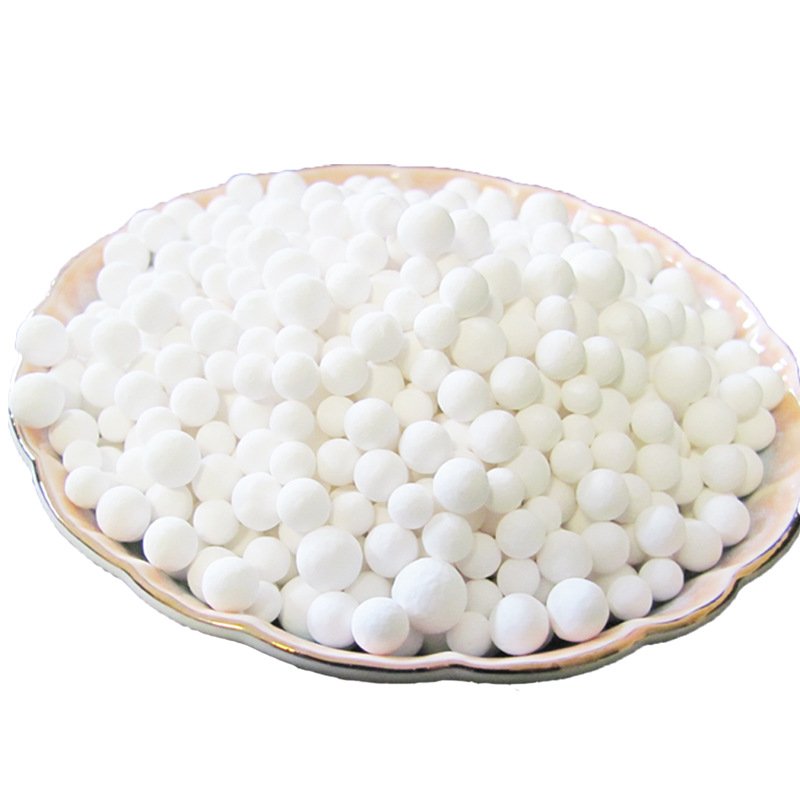
Activated alumina ball, also known as alumina desiccants or alumina spheres, are porous, granular forms of aluminum oxide (Al₂O₃) that have undergone a specialized activation process. This process enhances the material’s surface area and porosity, resulting in exceptional adsorptive properties. These spherical pellets are typically white or off-white in color and range in size from a few millimeters to several centimeters, depending on the intended application.
Properties and characteristics of activated alumina balls
- Highly Porous Structure: One of the defining characteristics of activated alumina balls is their highly porous nature. This unique structure provides an extensive surface area, allowing for efficient adsorption of various molecules and substances.
- Chemical Inertness: Activated alumina balls are renowned for their chemical inertness, making them resistant to a wide range of corrosive substances and environments. This property ensures their durability and longevity in demanding applications.
- Thermal Stability: These remarkable spheres exhibit exceptional thermal stability, withstanding high temperatures without compromising their structural integrity or adsorptive capabilities.
- Mechanical Strength: Despite their porous nature, activated alumina balls possess remarkable mechanical strength, enabling them to withstand the rigors of various industrial processes without crumbling or degrading.
- Regenerative Capacity: A significant advantage of activated alumina balls is their ability to be regenerated and reused multiple times, minimizing waste and reducing operational costs.
Applications of activated alumina balls
The versatility of activated alumina ball has led to their widespread adoption across various industries and applications:
- Desiccation and Dehydration: One of the primary applications of activated alumina balls is in the removal of moisture from gases, liquids, and solids. They are extensively used in dehumidification systems, natural gas processing, and the preservation of perishable goods.
- Catalysis and Chemical Reactions: The high surface area and porous structure of activated alumina balls make them excellent catalysts and catalyst supports for various chemical reactions, including hydrogenation, dehydrogenation, and oxidation processes.
- Water Treatment and Purification: Activated alumina balls play a crucial role in water treatment processes, acting as effective adsorbents for removing impurities, such as fluoride, arsenic, and other contaminants from water supplies.
- Air Purification and Filtration: These versatile spheres find applications in air purification systems, where they adsorb and remove pollutants, odors, and volatile organic compounds (VOCs) from indoor and industrial environments.
- Chromatography and Separation Processes: The unique properties of activated alumina balls make them valuable in chromatographic techniques and separation processes, enabling the purification and isolation of various compounds and substances.
How do activated alumina balls work?
The exceptional adsorptive properties of activated alumina balls stem from their highly porous structure and extensive surface area. When exposed to gases, liquids, or solids containing target molecules or substances, these porous spheres act as molecular sieves, selectively adsorbing and trapping the desired components onto their surface.
The adsorption process is driven by various forces, including van der Waals interactions, electrostatic attractions, and physical entrapment within the porous network. The specific adsorption mechanism depends on the nature of the adsorbate (the substance being adsorbed) and the operating conditions, such as temperature and pressure.
Once the activated alumina balls have reached their adsorption capacity, they can be regenerated through thermal or chemical processes, allowing for the desorption of the captured substances and enabling their reuse in subsequent cycles.
Benefits and advantages of using activated alumina balls
- High Adsorption Capacity: Activated alumina balls boast an impressive adsorption capacity, enabling them to effectively remove and capture target substances from various media.
- Selectivity: Depending on the application and operating conditions, activated alumina balls can exhibit selectivity towards specific molecules or compounds, making them valuable in separation and purification processes.
- Reusability and Cost-Effectiveness: One of the key advantages of activated alumina balls is their ability to be regenerated and reused multiple times, reducing operational costs and minimizing waste generation.
- Environmental Friendliness: Compared to many conventional adsorbents and filtration methods, activated alumina balls offer a more environmentally friendly alternative, as they can be regenerated and reused, reducing the need for frequent replacement.
- Versatility: The wide range of applications across diverse industries, from chemical processing to water treatment and air purification, highlights the versatility of activated alumina balls.
Factors to consider when selecting activated alumina balls
When selecting activated alumina balls for a specific application, several factors must be taken into consideration:
- Pore Size Distribution: The pore size distribution of activated alumina balls plays a crucial role in determining their adsorption selectivity and capacity. Different applications may require specific pore size ranges to optimize performance.
- Surface Area: The surface area of activated alumina balls is directly related to their adsorption capacity. Higher surface areas generally translate to increased adsorption efficiency.
- Particle Size and Shape: The size and shape of the activated alumina balls can influence their flow characteristics, pressure drop, and overall performance in various systems and processes.
- Chemical Compatibility: Depending on the operating environment and the substances involved, it is essential to ensure that the activated alumina balls are chemically compatible and resistant to potential corrosion or degradation.
- Regeneration Capability: The ability to effectively regenerate and reuse activated alumina balls is a crucial consideration, as it impacts the overall cost-effectiveness and sustainability of the application.
How to properly use activated alumina balls
To ensure optimal performance and longevity of activated alumina balls, it is essential to follow proper usage guidelines:
- Pretreatment: Before use, activated alumina balls may require pretreatment steps, such as drying, heating, or chemical conditioning, to enhance their adsorption capabilities and remove any contaminants or residues.
- System Design: The design of the system or process involving activated alumina balls should consider factors such as flow rates, pressure drops, and contact times to maximize their effectiveness.
- Regeneration Procedures: Proper regeneration procedures, involving thermal or chemical treatments, are crucial to restore the adsorption capacity of spent activated alumina balls and enable their reuse.
- Safety Precautions: When handling activated alumina balls, appropriate personal protective equipment (PPE) should be worn, and safe handling practices should be followed to minimize exposure to potential dust or residues.
Maintenance and storage of activated alumina balls
Proper maintenance and storage practices are essential to ensure the longevity and effectiveness of activated alumina balls:
- Regular Inspections: Periodic inspections of the activated alumina balls should be conducted to assess their condition, identify any signs of degradation or contamination, and determine the need for regeneration or replacement.
- Cleaning and Regeneration: Depending on the application and the substances adsorbed, activated alumina balls may require periodic cleaning or regeneration to restore their adsorption capacity and remove accumulated contaminants.
- Storage Conditions: When not in use, activated alumina balls should be stored in dry, cool, and well-ventilated conditions to prevent moisture absorption, contamination, or degradation.
- Handling and Disposal: Proper handling and disposal procedures should be followed to minimize the risk of exposure to potential contaminants or residues present on spent activated alumina balls.
Common misconceptions about activated alumina balls
Despite their widespread use and proven effectiveness, several misconceptions surround activated alumina balls:
- Myth: Activated alumina balls are single-use and cannot be regenerated. Reality: Activated alumina balls can be effectively regenerated and reused multiple times, reducing operational costs and minimizing waste generation.
- Myth: Activated alumina balls are only suitable for specific applications. Reality: The versatility of activated alumina balls allows them to be employed in a wide range of applications across various industries, including chemical processing, water treatment, and air purification.
- Myth: Activated alumina balls are environmentally harmful. Reality: When handled and disposed of properly, activated alumina balls pose minimal environmental risks. Additionally, their regenerative nature and ability to reduce waste contribute to their overall environmental friendliness.
- Myth: Activated alumina balls are expensive and cost-prohibitive. Reality: While the initial investment in activated alumina balls may be higher than some alternatives, their reusability and longevity often make them a cost-effective solution in the long run.
Conclusion: The importance of activated alumina balls in various industries
Activated alumina balls have proven to be invaluable assets in numerous industries, offering efficient and reliable solutions to a wide range of challenges. Their exceptional adsorptive properties, chemical inertness, and thermal stability have made them indispensable in applications such as desiccation, catalysis, water treatment, and air purification.
As industries continue to prioritize sustainability and environmental responsibility, the regenerative nature and reusability of activated alumina balls align perfectly with these goals, reducing waste generation and minimizing the need for frequent replacements.
Furthermore, ongoing research and advancements in the field of activated alumina balls promise to unlock even more potential applications and enhance their performance, solidifying their position as a versatile and invaluable material in the years to come.
If you’re seeking efficient and reliable solutions for your industrial processes or applications, consider exploring the vast potential of activated alumina balls. Our team of experts is ready to guide you through the selection, implementation, and maintenance of these remarkable spherical wonders, ensuring optimal performance and cost-effectiveness. Contact us today to learn more about how activated alumina balls can revolutionize your operations and unlock new levels of efficiency and sustainability.
 Slovenian
  English
  Arabic
  Bulgarian
  Czech
Czech  Danish
  German
  Greek
Greek  Spanish
  Chinese
  Finnish
  French
  Hungarian
  Indonesian
  Italian
  Japanese
  Korean
  Lithuanian
  Norwegian
  Dutch
Dutch  Polish
  Portuguese (Brazil)
  Portuguese (Portugal)
  Romanian
  Russian
  Slovak
  Swedish
  Turkish
  Ukrainian
  Estonian
  Latvian